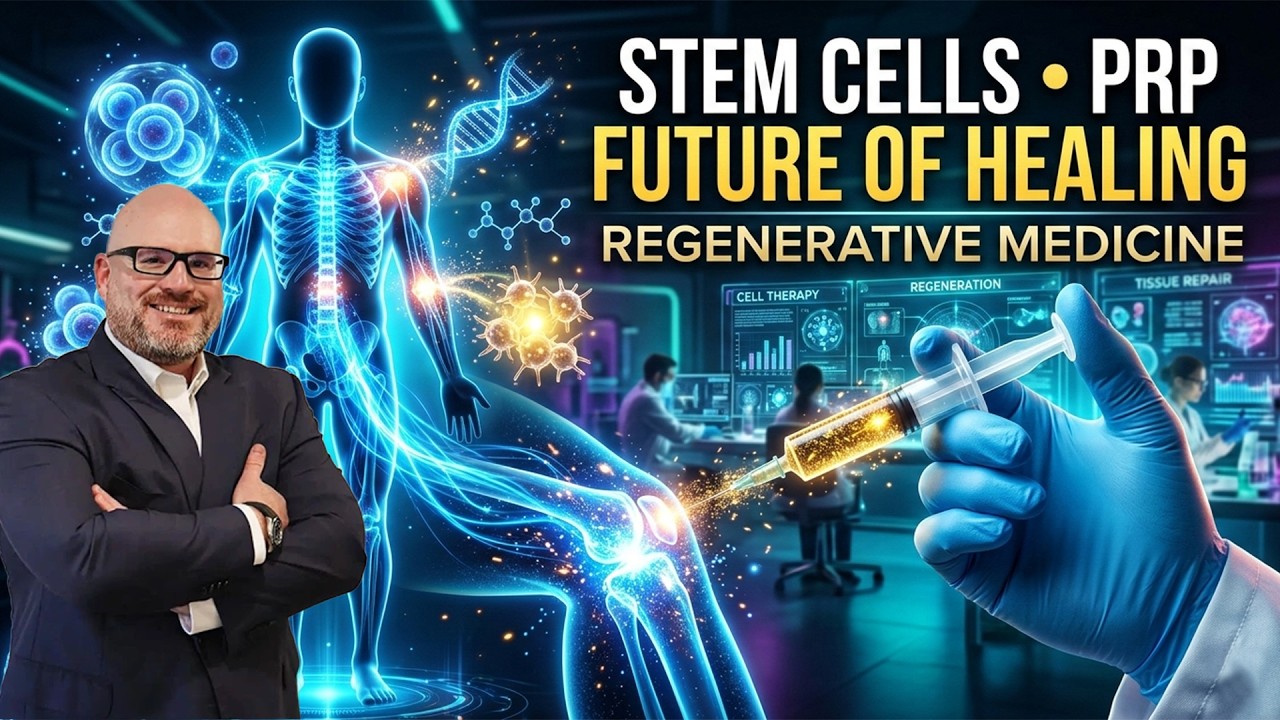
Dr. Howard Spinowitz, DO is a board-certified anesthesiologist with over 20 years of experience who now serves as Co-Founder and CEO of De-Senesce, a longevity and hormone health practice based at 1361 13th Ave South in Jacksonville Beach, Florida, serving patients throughout the greater Jacksonville area. In this episode, he joins host Mark Anthony to talk about the philosophy behind De-Senesce, his own health journey, and a proactive, whole-body approach to aging well.
The conversation moves from the meaning behind the practice's name, to Dr. Spinowitz's own 20-plus years living with Type 1 Diabetes, into the science of fasting and cellular repair, bioidentical hormones, advanced lab work, and a pointed warning about the unregulated peptide market.
Key Takeaways
- De-Senesce takes its name from the Latin root for aging — "de-" signifying the goal of slowing cellular aging and extending health span (years spent in vibrant health), not just overall lifespan.
- Dr. Spinowitz was diagnosed with Type 1 Diabetes at age 22. He says that while the condition inherently accelerates biological aging, nutrition, lifestyle, and medical oversight have helped him achieve a biological age younger than his chronological age.
- Diet, fasting, and cellular mechanisms like mTOR and autophagy can trigger the body's own repair processes — he shares a personal story of a friend who used nutritional changes to help recover from lymphoma.
- He advocates for bioidentical hormone replacement therapy (BHRT) over synthetic options for both men and women, and pushes for advanced diagnostics — ApoB, Lp(a), and inflammatory markers — beyond a standard cholesterol panel.
- He specifically warns against unregulated, online-sourced peptides, citing a lack of quality control and long-term safety studies.
What "De-Senesce" Means
Dr. Spinowitz explained that the practice's name comes directly from the Latin term for aging, with "de-" signifying the goal of slowing that process down. The distinction he draws is between lifespan and health span — not just how long someone lives, but how many of those years are actually spent in vibrant health. That distinction is the organizing idea behind everything else De-Senesce does clinically.
Living With Type 1 Diabetes — And Aging Younger Than His Chronological Age
Dr. Spinowitz was diagnosed with Type 1 Diabetes at age 22. He was direct about the fact that the condition inherently accelerates biological aging — it isn't something he downplays. But he described using nutrition, lifestyle changes, and ongoing medical oversight to work against that, saying he's achieved a biological age significantly younger than his actual chronological age. It's a personal data point he uses to make the case that proactive management can meaningfully offset even a genuine, inherited risk factor.
Nutrition, Fasting, and the Body's Own Repair Switches
A large part of the conversation focused on how diet and fasting interact with cellular mechanisms like mTOR and autophagy — the body's own processes for triggering repair. Dr. Spinowitz shared a personal anecdote about a friend who used nutritional changes to help aid recovery from lymphoma, using it to illustrate how much leverage diet can have on the body's underlying repair systems, not just on weight or energy.
Bioidentical Hormones and Diagnostics That Go Beyond a Standard Panel
On the clinical side, Dr. Spinowitz advocates for bioidentical hormone replacement therapy (BHRT) over synthetic alternatives, noting that hormones like testosterone and estradiol matter for both men and women — not just one or the other. He also pushed for looking past a standard cholesterol panel, pointing to markers like ApoB, Lp(a), and inflammatory markers as a more complete picture of actual cardiovascular and metabolic risk.
A Warning on Unregulated Peptides
Dr. Spinowitz was direct about one risk in particular: peptides sourced online, outside of clinical oversight. He warned that many of these products carry no real quality control and lack long-term safety data, positioning it as a real risk in the current wellness and longevity space rather than a shortcut worth taking.
Take Ownership of Your Health
Mark and Dr. Spinowitz closed the conversation with a shared message: it's never too late to make positive changes, and patients are better served by practitioners who look at the whole body rather than managing individual symptoms in isolation. It's the same health-span-over-lifespan idea the whole conversation was built around, restated as a direct call to action for anyone listening.