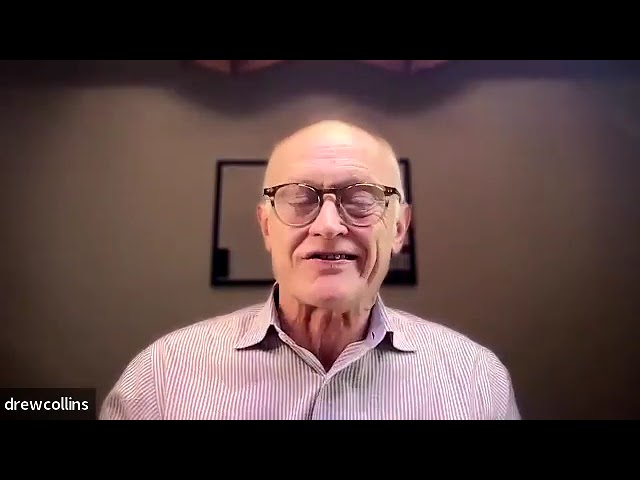
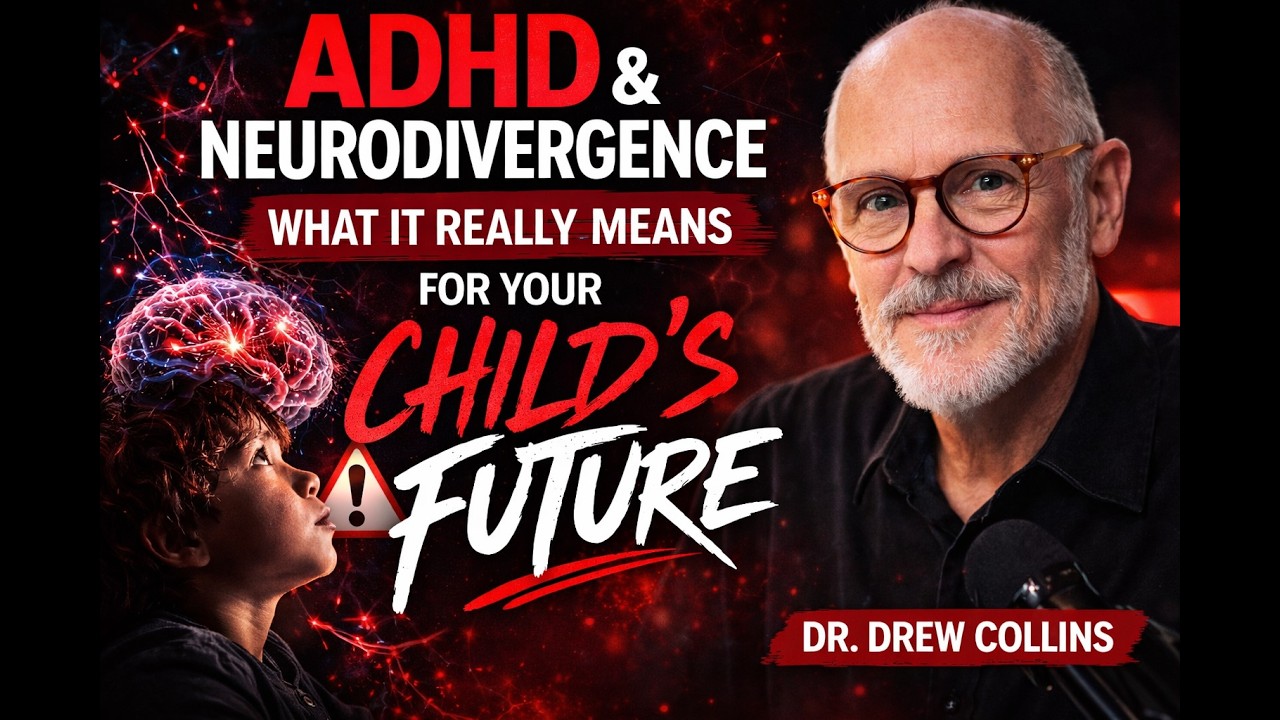
Forty-one years into practicing naturopathic medicine, Dr. Drew Collins doesn't lead with a supplement stack or a diagnosis. In this conversation with Mark Anthony, he makes the case that real healthcare starts further upstream — with sleep, joy, community, and the quality of a patient's relationships — long before it ever gets to a pill, a peptide, or a procedure.
Collins earned his doctorate at Bastyr University and went on to teach as adjunct faculty there and at other naturopathic medical programs, including the Southwest College of Naturopathic Medicine and National College. Over four decades he's treated thousands of patients, first largely across the American Southwest and now from Bend, Oregon, where he sees patients in person and via telemedicine across the U.S., Canada, and Mexico. He describes himself as a specialist in bioidentical hormone therapy — testosterone and estrogen — along with thyroid and glandular therapies, and says he tends to try new diagnostics and treatments on himself before recommending them to patients.
Key Takeaways
- Dr. Drew Collins has practiced naturopathic medicine for 41 years, trained at Bastyr University, and taught at several U.S. naturopathic medical programs.
- He specializes in bioidentical hormone therapy, thyroid and glandular therapies, and sees patients via telemedicine across the U.S., Canada, and Mexico from his current base in Bend, Oregon.
- His personal sleep protocol includes cutting screen time before bed, a hot-then-cold shower, grounding pads, binaural-beat audio, and herbal aids like melatonin and valerian.
- He points to research suggesting exercise grows gray matter in the brain — and that dancing, with its balance and social demands, appears to build more of it than most other workouts.
- He describes simply being present with a patient, without rushing to offer advice, as some of the most effective "medicine" he has — and argues lasting change depends on a long-term doctor-patient relationship, not a single prescription.
A Naturopathic Physician Who Has Chased the Cutting Edge
Collins traces some of his interest in regenerative and anti-aging medicine to clinics he worked in that pursued what he called "the top end of anti-aging and biohacking," including medical tourism to Ukraine and Russia — countries he said were roughly 50 years ahead of the U.S. in stem cell research — before the war made that impossible. More recently, while practicing in San Diego, he worked alongside a stem cell research lab running FDA clinical trials, giving him a firsthand look at what the therapy could and couldn't do. He was candid that the regenerative field still has "wild west" aspects, particularly around sourcing and screening human tissue, and described a spectrum of options running from human-derived cells down to animal-glandular therapies with roots in centuries-old practice.
Ancient Wisdom, Modern Diagnostics
Collins described himself as a Chinese herbalist as well as a student of Ayurvedic medicine, and said he regularly draws on the health practices of indigenous cultures and the research on "blue zones" — regions with an unusually high concentration of people living past 100. His point wasn't that older is automatically better, but that long-standing cultures tend to have settled on diets, environmental relationships, and social patterns that have proven durable over generations. He uses that lens with patients chasing the latest single-ingredient trend — a celery-juice cleanse or an influencer supplement — asking, in effect, whether an entire culture could actually sustain itself on that alone.
"Just breathe, and be present with somebody — that's about the most healing thing you can do."
— Dr. Drew Collins, NDSleep, Movement, and the Habits Dr. Collins Prescribes Most
Ask Collins how a patient is doing, and two questions come before anything else: how happy are they, and how well are they sleeping? He compares sleep to a gas tank — there's little point prescribing more to someone who's already running on empty. His own sleep protocol, which he shares with patients, includes cutting blue-light and screen exposure before bed, keeping the bedroom cool and dark, reading a physical book instead of a device, and — his own habit — taking a hot shower followed by a cold rinse right before getting into bed to interrupt a racing mind. He also uses tools like grounding pads, which connect a sleeper to a home's electrical ground, and a binaural-beat device he calls Mind Spa, alongside more familiar aids like melatonin and valerian.
On movement, Collins pointed to research showing that exercise builds gray matter in the brain — and that dancing appears to build more of it than most other forms of exercise, which he attributes to the combination of balance, cross-body coordination, and the nervous-system engagement of moving with another person. He's taken up tango himself and recommends it, along with yoga or group classes like Zumba, specifically for patients who've stopped exercising socially.
Presence as Medicine
Collins repeatedly returned to isolation as a root cause of poor health, describing two recent patients to Mark Anthony: an 81-year-old man who is physically fit but lives alone and told Collins he "never runs into women," and a gig-economy driver who works until 3 a.m. and struggles with the basic chronobiology of trying to live a normal daytime life on almost no sleep. In both cases, he said, the fix had less to do with medicine than with reconnecting people to community — touch, conversation, and shared activity rather than isolation.
The through-line of the conversation was Collins's belief that relationship and presence do more for patients than any single intervention. He described comforting a woman who had just shared devastating news about her son by saying nothing at all and simply staying present with her — an instinct to hold space rather than immediately offer advice that he called one of the most powerful tools he has. He was equally direct about what's been lost in modern medicine: patients who see a different primary care doctor every visit and don't know them well enough to trust their advice the first, or even the fifth, time it's given. His model instead treats the patient relationship as an ongoing collaboration built over years, not a single visit.
For listeners weighing a purely symptom-focused approach to their health against something broader, this episode offers a longtime practitioner's case for zooming out — treating sleep, movement, community, and the doctor-patient relationship itself as part of the prescription.