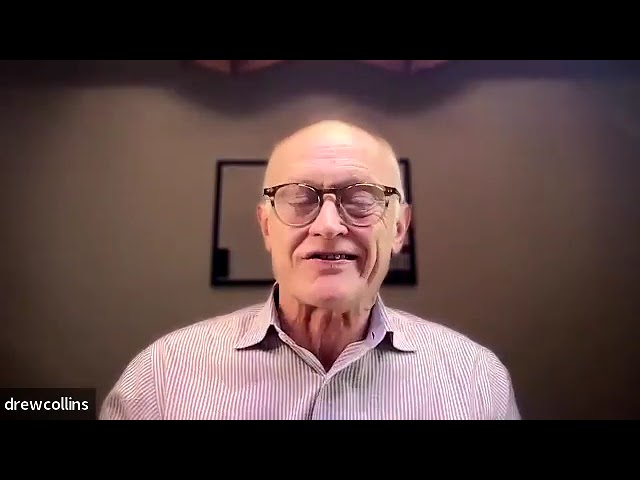
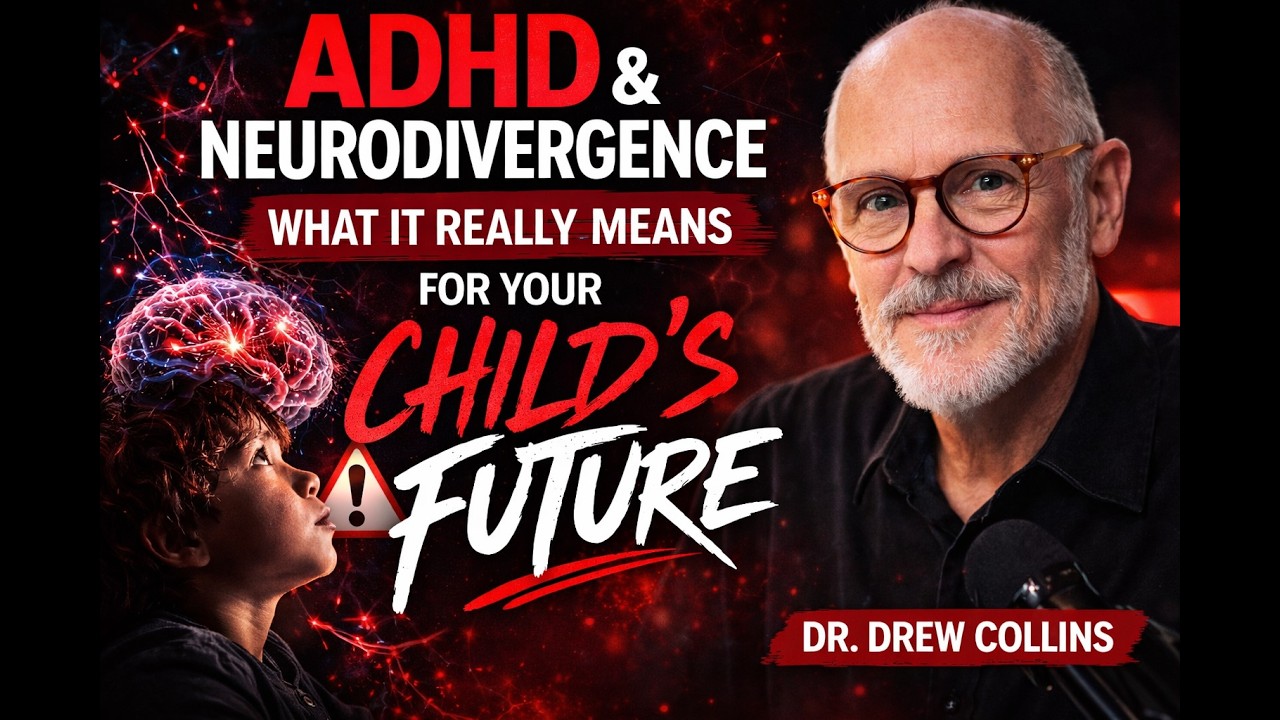
Most people who go looking for information on testosterone therapy land on either a bro-science forum or a strip-mall "low-T" clinic. Dr. Drew Collins, a board-certified naturopathic physician and integrative medicine leader, spent this conversation with Mark Anthony trying to close that gap — walking through what testosterone actually does in the body, why the delivery method matters almost as much as the dose, how it applies to women as much as men, and how a handful of genetic and gut-health threads tie into the ADHD and neurodivergence work he's expanding into next.
Collins runs Proactive Choice, a cash-pay integrative and hormone practice that has provided care to patients in the San Diego area since 2016 and now operates out of Oregon, where he also sees patients nationwide through telemedicine. Away from the clinic, he described himself as a working artist — watercolors, acrylics, oils — and brought that same plain-language, descriptive style to the science, reaching for analogies like a Mr. Potato Head kit and a hot-air balloon with a gondola to explain how cholesterol becomes a sex hormone and why "total" testosterone on a lab report can be misleading.
Key Takeaways
- Persistent irritability, low motivation, erectile dysfunction, and slow recovery from workouts or injuries are, in Dr. Collins's experience, some of the earliest and most overlooked signs of low testosterone in men.
- Testosterone comes in several delivery forms — injectable esters, compounded creams, pellets, and lozenges — and Dr. Collins said the differences in how each is absorbed and metabolized matter more than most patients realize.
- A total testosterone number on a lab report can be misleading on its own; Dr. Collins said free testosterone — the portion not bound to carrier proteins like sex hormone-binding globulin — is what a person actually feels, and should be checked alongside estrogen and PSA.
- Women are candidates for testosterone therapy too, typically at a small fraction of the dose used in men, and Dr. Collins said many of his female patients report meaningful improvements in bone strength and libido.
- Dr. Collins connected certain mood, focus, and hyperactivity patterns — including some ADHD presentations — to genetic methylation factors and gut health, a thread he's expanding on in an upcoming public talk on ADHD, neurodivergence, and autism.
What Low Testosterone Actually Looks Like
Asked directly what symptoms tend to show up in men in their 30s through their 60s, Collins didn't start with a lab value — he started with mood. Grumpiness, feeling generally uncomfortable in your own skin, holding grudges, and a low-grade unhappiness that gets written off as stress or a bad job are, in his experience, some of the most common early markers. He said men rarely connect that irritability to hormones on their own — women, he noted, tend to have perimenopause and menopause explained to them well before the changes hit, while men are often blindsided in their 30s while focused on career and family.
Erectile dysfunction is the symptom men are most willing to name out loud, and Collins tied it partly to cardiovascular health — blood sugar and vascular issues, he said, can show up as ED before they show up anywhere else. But the pattern he sees most often is physical: soreness that used to fade in a day lingering for a week, tendon and ligament injuries that take longer to heal, and everyday exertion — a hike, a day of body surfing, yard work — leaving people more beat up than it used to. He said the shift in motivation and energy after starting treatment tends to show up quickly rather than building slowly over months.
"You're not low on hormones because you're old — you're old because you're low on hormones."
— Dr. Drew CollinsCream, Shots, or Pellets — Why "Free" Testosterone Is the Number That Matters
Collins was specific that not all testosterone delivery methods work the same way. Commercially available injectable testosterone — cipionate or enanthate — is, in his words, a chemical "salt" version of the hormone, formulated with a carrier oil so it releases slowly over about a week. Compounded transdermal creams, by contrast, deliver testosterone closer to its natural, bioidentical form, but need to be applied daily since the body clears it faster; pellets and troches are other options he discussed, each with a different absorption curve. He noted that many commercially available, FDA-approved topical gels are formulated far more conservatively than what a compounding pharmacy can customize, which is part of why some patients who "tried testosterone and it didn't work" simply weren't given enough.
He was also direct about why a single lab number isn't the whole story: a large share of testosterone in the blood is bound to carrier proteins like sex hormone-binding globulin and isn't actually available for the body to use. He compared it to a hot-air balloon with a gondola basket underneath — the balloon is the bound hormone, the gondola is the usable "free" testosterone a person actually feels. That's why he tracks free testosterone, not just total, alongside estrogen and PSA. Testosterone can convert into estrogen through a process called aromatization — more so in men carrying extra abdominal fat — and rising estrogen is what he watches for as a driver of complications; some patients end up needing a second, low-dose prescription specifically to manage that conversion. He also flagged PSA as a value to track, noting that testosterone itself doesn't cause prostate cancer, but can modestly raise PSA in men who already have prostate enlargement, which is why ongoing lab work — not a one-time test — is central to how he manages the relationship.
Testosterone Isn't Just a Men's Issue
Women, Collins said, respond strongly to testosterone even though they use a small fraction of the amount typically prescribed to men. He described it as one of the more surprising parts of bioidentical hormone therapy for female patients: they usually come in asking about estrogen and progesterone for hot flashes and mood, and don't request testosterone specifically, but once it's added based on lab results, many report renewed functional strength — carrying groceries, opening jars — along with a meaningful return of libido. He said testosterone can be even more effective than estrogen alone for supporting bone density, with no added cancer risk in the doses he uses. Application site matters, since testosterone cream applied near areas with existing hair follicles can darken existing hair, so he avoids putting it in those spots.
He also pointed to a generational gap: many women who came of age during the fear generated by the 2001 Women's Health Initiative study stopped hormone therapy altogether and, in his view, lost years of bone density and cognitive protection as a result. He said the field is now moving back toward transdermal estrogen delivery, which avoids some of the liver-metabolism concerns tied to oral estrogen.
Where ADHD, Genetics, and Gut Health Fit In
The ADHD portion of the conversation was shorter, framed by Collins largely as a preview of a bigger topic he's continuing to develop. He described newer genetic testing that can identify methylation-related gene variants — sometimes called SNPs, or single nucleotide polymorphisms — that he said are increasingly common and can be addressed with specifically methylated supplement products rather than one-size-fits-all approaches. He drew a strong connection between gut health and a whole cluster of conditions, including hyperactivity, depression, and autism-spectrum presentations, pointing to the gut's role in producing neurotransmitters tied to mood. He was careful to frame this as an area still being clarified rather than settled science, and said he's expanding on it in an upcoming public talk on ADHD, neurodivergence, and autism in Bend, Oregon.
Who This Conversation Is For
If you've wondered whether your mood, energy, or recovery from workouts has more to do with hormones than willpower — or you're trying to make sense of the difference between testosterone creams, shots, and what your lab report actually means — this episode is a plain-language walkthrough from a practitioner who treats it as a long-term relationship rather than a quick fix.